.˳·˖✶◉‿◉✶˖·˳.
ASSIGNMENT:
Research and write a blog post about two examples of robotic art. Tell us about the character, the interaction, the nuances of the robotic art.
- Art Piece #1: a very clear cut example of robotic art.
- Art Piece #2: a less direct example that does not physically resemble a mainstream robot but one you still consider to be robotic art.
RESPONSE:
Art Piece #1
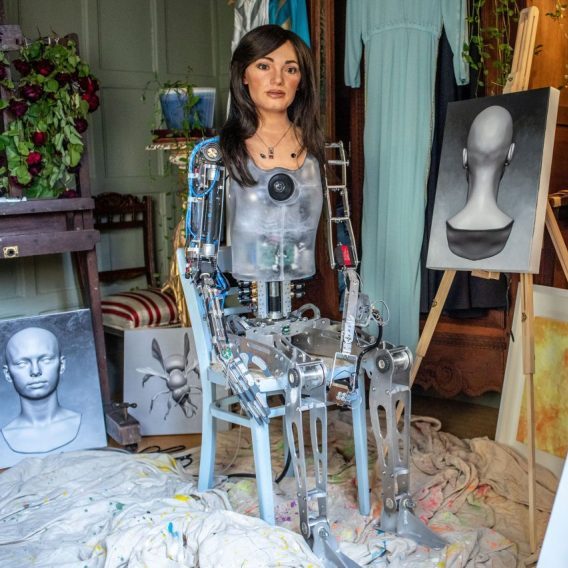
The very clear cut example of art made by a robot I immediately think of Ai-Da. Ai-Da is a humanoid robot that was created to resemble a female form and named after historical computing icon Ada Lovelace. The creator is Aidan Meller who employed the help of robotics and computer engineers to build a view of what an ‘AI Artist’ looks like in order to bring up conversations around the concerns of AI.
I have a lot of issues with Ai-Da, noone of which are any fault of the machine but fall on the both underwhelming and sexist (even if unintentionally) views of its creator (Meller likes to use she/her pronouns but I really feel conflicted about that so will continue with it). I welcome art that discusses AI, implications of the human cyborg, and gender in arts and technology but unfortunately Ai-Da is an empty promise of a conversation.
To preface this, I have to admit my own bias in that most of the time, I feel very off about men reproducing their interpretation of the ‘female form’ in their gaze and then calling it art. It is often devoid of actual perspective outside of lazy sexualization, occasional rage, or some combination of the two. While I understand that one of the points the creator is trying to make is the place of women in the arts, I hardly feel that creating a robot in the female form that has: no agency, no say in the subject matter, no say in the desire to create or not, and is made into a weirdly fetishized version of what a woman looks like does that job effectively. In many ways, this robot ‘woman’ takes opportunities away from actual woman artists in the field by taking spaces in residencies, galleries, and at auctions (one work Ai-Da created sold for a cool $1.32m at Sotheby’s) that ideally should be going to a real person and not by a machine created by men with a wig on it. I think it is also important to mention that Ai-Da doesn’t even actually finish the paintings, and it requires the labor of a woman painter named Suzie Emery (although this isn’t made readily available, it was this Frieze piece that brought that fact to my attention) to finish the job.
When I started to question if my ‘ick’ feelings were justified or if that was the point of the piece, everything I felt was validated by this extremely uncomfortable write up by Waldemar Januszczak that sexualizes Ai-Da in a way that feels deeply inappropriate and I can’t help but feel like it reveals things he might think about human artists that happen to be women but doesn’t say out loud.
I am not against machine works of art or art co-created with machines and frequently engage in art that crosses that divide in my own practice. However, I can’t help but feel like this statement is an extremely disingenuous way to simply make a ‘woman’ artist in the eyes of a man who very clearly sees ‘her’ place in the art world as one without agency, voice, or say in anything and is in itself an item for consumption by the very crowd that it creates for.
Art Piece #2
Maybe this is controversial since humans are actually creating the art pieces, but I think Jeff Koons’ art could be considered ‘robotic art’. I will admit that I am not a fan of his work and I find it to be empty and devoid of anything aside from eye-catching spectacle that rich art collectors seem to love. He took the concept of mechanical-like art production that Warhol popularized and took it to a level that only someone with his background as a Wall Street executive could achieve.
While he might come up with the ideas, he uses both computers and a team of assistant artists that actually sculpt the items for him. To my knowledge these artists do not get credit for their labor and are essentially ‘machines’ that do highly specialized work to bring his ideas to life.
In this way, how is this process that much different from AI outside of maybe providing an up-and coming artist with some connections and enough money to rent a room in a shared apartment? These assistants have no say in the work or agency over what they make- they are simply there to perform a task and create for the benefit of Koons’ vision. It feels extractive in a way that more traditional master and apprentice relationships lack. I’m not saying those relationships can’t also be exploitative, but this commoditized and large scale labor for one of the wealthiest living artists just feels robotic and empty.
I think this work does bring up questions of ‘what makes an artist?’ in terms of skills vs ideas and I will give it that much in terms of sparking conversation. However where I feel like Warhol had an ongoing conversation and statements with his pieces, Koons’ work feels like it just takes the manufacturing side of things to capitalize on the more ridiculous aspects of the art world without saying anything that much deeper.
While researching some of my opinions, I came across this article that sums up my overall feelings about what it is that makes Koons’ art feel ‘off’ to me (shout out to the Guy Debord “Society of the Spectacle” reference as well, a fav piece of mine!).
Overall Reflection
While this thought exercise may not have been intended to be a critique of art vs. machine and robotic art, it definitely revealed to me my more complicated relationship with this concept overall. I think it takes a lot more effort for me to consider robot-made things ‘art.’ In my opinion, many artists often fall into the trap of creating with a machine that doesn’t add depth to the piece beyond dazzling viewers. I have definitely fallen into this habit as well, where I overcomplicate or add in technology just for the sake of adding it. At the end of the day, I don’t think there is anything inherently wrong with that, but I do think it is irresponsible to inflate the value of an artistic piece based solely on the level of technology included in it.
.˳·˖✶◉‿◉✶˖·˳.
⠀⠀⠀⠀⠀⠀⠀⠀⠀⠀⠀⠀⠀⠀⠀⠀⠀⠀⠀⠀⠀⢀⠀⠀⠀⠀⠀⡀⠀⠀⠀⠀⠀⠀⠀⠀⠀⠀⠀⠀⠀⠀⠀⠀⠀
⠀⠀⠀⠀⠀⠀⠀⠀⠀⠀⠀⢀⣄⠀⠀⢿⡇⠀⠀⣾⢀⣸⣄⠀⢠⡐⡄⣹⠀⣄⠀⠀⠀⠀⠀⠀⠀⠀⠀⠀⠀⠀⠀⠀⠀
⠀⠀⠀⠀⠀⠀⠀⠀⡀⠀⢧⢘⣼⣤⠴⠾⣿⡛⠋⣿⡏⢹⡏⠉⣽⢻⢛⡟⢲⡿⣤⣠⣆⡔⠀⠀⠀⠀⠀⠀⠀⠀⠀⠀⠀
⠀⠀⠀⠀⠀⠀⠀⠀⢻⣤⡼⠿⣟⣿⣷⣤⣸⣿⣦⣿⣷⣿⣷⣾⣿⣿⣿⣷⣟⣁⣴⡿⠟⠲⣤⣴⠃⠀⢀⠄⠀⠀⠀⠀⠀
⠀⠀⠀⠀⠀⠰⣼⣶⣎⣉⣙⣿⣿⠿⢻⣿⠟⠋⠉⠙⢟⣛⠀⠀⠀⠙⠟⢿⡙⠛⠿⣶⣶⡾⠋⢉⣳⣴⡟⡠⠀⢀⢀⠀⠀
⠀⠀⠀⠠⣄⣠⣋⣉⣹⣿⠟⠋⠀⠀⡾⠁⠀⠀⢀⣾⣿⣿⣿⠷⠀⢤⡀⠈⣷⠀⠀⠀⠉⠻⢿⣿⣿⡿⠛⢧⣠⣾⠞⠀⠀
⠀⠀⠦⣀⣞⣭⣽⡿⠟⠁⠀⠀⠀⠀⡇⠀⠀⠀⢸⣿⣿⣿⣿⣄⣀⣠⠇⠀⢸⠀⠀⠀⠀⠀⠀⠈⠛⣾⣿⣿⣯⠴⠂⣀⡴
⠀⠐⠦⠴⣶⡿⡟⠀⠀⠀⠀⠀⠀⠀⣷⠀⠀⠀⠘⢿⣿⣿⣿⡿⠃⠀⠀⠀⡿⠀⠀⠀⠀⠀⠀⢀⣾⣿⣭⣍⡉⠉⠉⠁⠀
⢠⠎⢩⠟⠋⢃⢳⠀⠀⠀⠀⠀⠀⠀⠘⣷⡀⠀⠀⠀⠀⠉⠀⠀⠀⠀⢀⡾⠁⠀⠀⠀⠀⣀⣴⣿⣟⣋⠉⠉⡓⠦⠀⠀⠀
⠘⣄⠘⠒⠒⠘⠢⠧⢤⣀⡀⠀⠀⠀⠀⠈⠻⢦⣀⠀⠀⠀⠀⢀⣀⡴⠛⠁⠀⠀⣀⣤⣾⣿⣏⡉⠉⢉⡿⠿⠀⠀⠀⠀⠀
⠀⠀⠉⠁⠀⠀⠀⠦⢤⡾⣿⡿⣷⣶⣦⣤⣄⣀⣈⣉⣉⣉⣉⣉⣁⣠⣤⣴⣾⡿⣿⣿⢧⡀⠈⣹⠶⠋⠀⠀⠀⠀⠀⠀⠀
⠀⠀⠀⠀⠀⠀⠀⠀⠀⠈⠓⠤⣋⠁⡼⠛⠛⡿⣿⠖⢛⣿⠛⠛⣿⡟⠛⠻⣿⡱⠄⠉⣣⠼⠊⠁⠀⠀⠀⠀⠀⠀⠀⠀⠀
⠀⠀⠀⠀⠀⠀⠀⠀⠀⠀⠀⠀⠀⠉⠓⠤⢤⣹⣁⠀⢸⡇⠀⠀⠸⡃⣀⣀⠬⠷⠒⠉⠀⠀⠀⠀⠀⠀⠀⠀⠀⠀⠀⠀⠀
⠀⠀⠀⠀⠀⠀⠀⠀⠀⠀⠀⠀⠀⠀⠀⠀⠀⠀⠀⠉⠉⠉⠉⠉⠉⠉⠀⠀⠀⠀⠀⠀⠀⠀⠀⠀⠀⠀⠀⠀⠀⠀⠀⠀⠀
 itp oddities
Leave a comment