PERSONAL REFLECTION:
Although sounds are all around us, it isn’t something I tend to actively consider unless there is something so pleasant or grating to my senses that it forces me to acknowledge it. In terms of storytelling, sound is a powerful way to convey a sense of space, evoke emotions, and add to the overall voice of the story. While considering the role of sound in media, it made me think of excerpts I read as an undergrad student at The New School- The Work of Art in the Age of Mechanical Reproduction by Walter Benjamin and On the Fetish-Character in Music and the Regression of Listening by Theodor W. Adorno.
Adorno’s ideas on what makes ‘good’ sound and the role of the listener as either being an active participant in truly listening or as a passive consumer came to mind. And while I don’t necessarily agree with all of Adorno’s opinions on what constitutes ‘good’ music or sound, it made me consider the ever-growing use of AI in both media creation and consumption.
AI has made the art of sound and music more widely accessible, but has also in turn fed into the concept of the ‘regression of listening,’ a term coined by Adorno. Just because sound can be added, should it be? And with the presence of AI-generated sound and music fed to us through AI-powered algorithms, in what ways does that cheapen the overall experience for both the listener and artist? The sounds we consume turn into the beat that marches us complacently into the arms of big tech and data for the sake of profit. Sound is no longer representative of meaningful expression, but serves as fuel for capitalism and mindless consumption.
In this first class, I was left with an appreciation of how works of art that purposefully remove sound create a vacuum in which we are forced to listen. In particular, I found John Cage’s 4′ 33″ composition compelling. The stage is set for a beautiful orchestra to play, however, in its place we are meant to contemplate what is said by the lack of sound. In art where silence takes over a world filled with noise, it serves as a reminder of the importance of sound and asks us to question its role in society and culture.
In terms of creating sound, I really appreciated reading about Haley Shaw‘s approach to sound design in Transom.
“At its best, sound design bridges understanding, enhances the impact of the story, immerses the audience, and explores new ways of communicating. But even when going for goosebumps, the intended feeling should emerge from the story, not the design.” – Haley Shaw
As someone who doesn’t come from a formal music or sound effects background, it was helpful to get some context in where to begin and I found it had a lot of parallels in other work I have done with world-building in writing and 3D spaces. Listing words and feelings associated with the larger narrative, focusing on the small details that add depth to the soundscape, creating rules for the world… it all comes together as a sonic collage to help give soul to the overall story.
In terms of hearing the stories and soul created by sound, I appreciated the TEDx Talk “The Difference Between Hearing and Listening” by Pauline Oliveros. The concept of ‘Deep Listening’ or the art of listening and responding to environmental conditions was inspired by her and two bandmates after they were forced to retrain how they listened and created music in an underground cistern. As they created sounds, they noticed how the reverberations and echos meant that they had to ‘respect the sound that was coming back to [them] from the cistern walls and include it in their music sensibility.’
“To hear is the physical means that enables perception, to listen is to give attention to what is perceived both acoustically and psychologically.” – Pauline Oliveros
Deep listening treats the act of listening as a full-body, individual experience. It encourages one to appreciate the differences in acoustic space and the sound itself through ‘learning to expand the perception of sounds to include the whole space-time continuum of sound.’ By reveling in the complexity of sound and picking up on the details while also giving attention to the narrative as a whole, we can harness our ability to process sound to listen in new and more complex ways.
I believe that Oliveros provides a counter to the ‘cheapening’ of sounds claimed by Adorno. By practicing our ability to go beyond simply hearing to the sensual experience of truly listening and respecting sound, we can find ways to explore the meaning behind the acoustic environment that surrounds us.
I for one, feel inspired after delving into the topic of sound and feel compelled to give more space and respect to sound. So if you see me sitting with my eyes closed on the subway, know that my ears and mind are wide open.
♫⋆。♪ ₊˚♬ ゚
ASSIGNMENT // SOUND SCAVENGER HUNT:
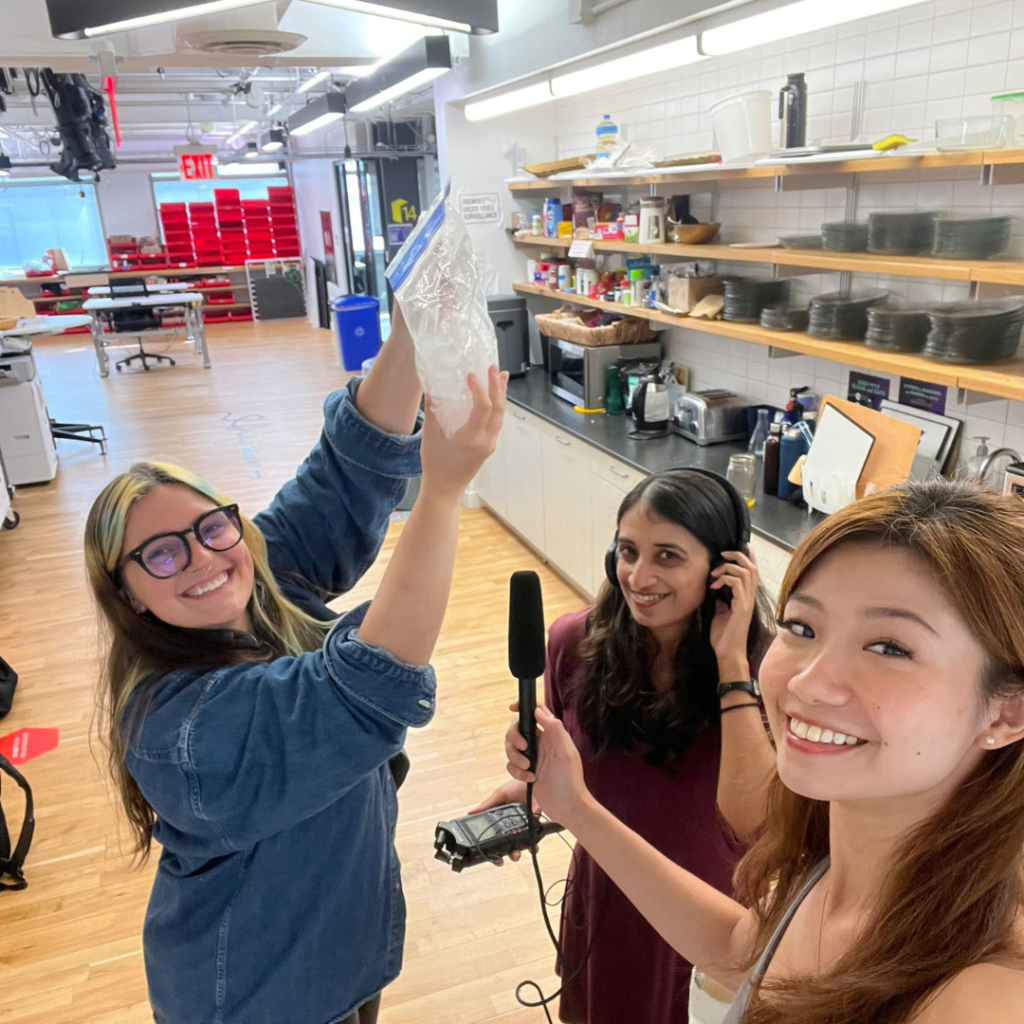
Beverly, Sana, and I all met and worked together to find all of the sounds on the scavenger hunt list. While some ideas we had didn’t always work out, experimenting and playing with different object combinations as well as sound intensity gave us brand new ideas that we wouldn’t have thought of.
The ice in a bag held up next to the air conditioner is a perfect example of this. The crinkling of the bag, combined with the soft whoosh of the air conditioning and the gentle clinking of ice created a unique blend of sounds that was beautifully unexpected. This sound is one of my favorite ones captured throughout the whole day.
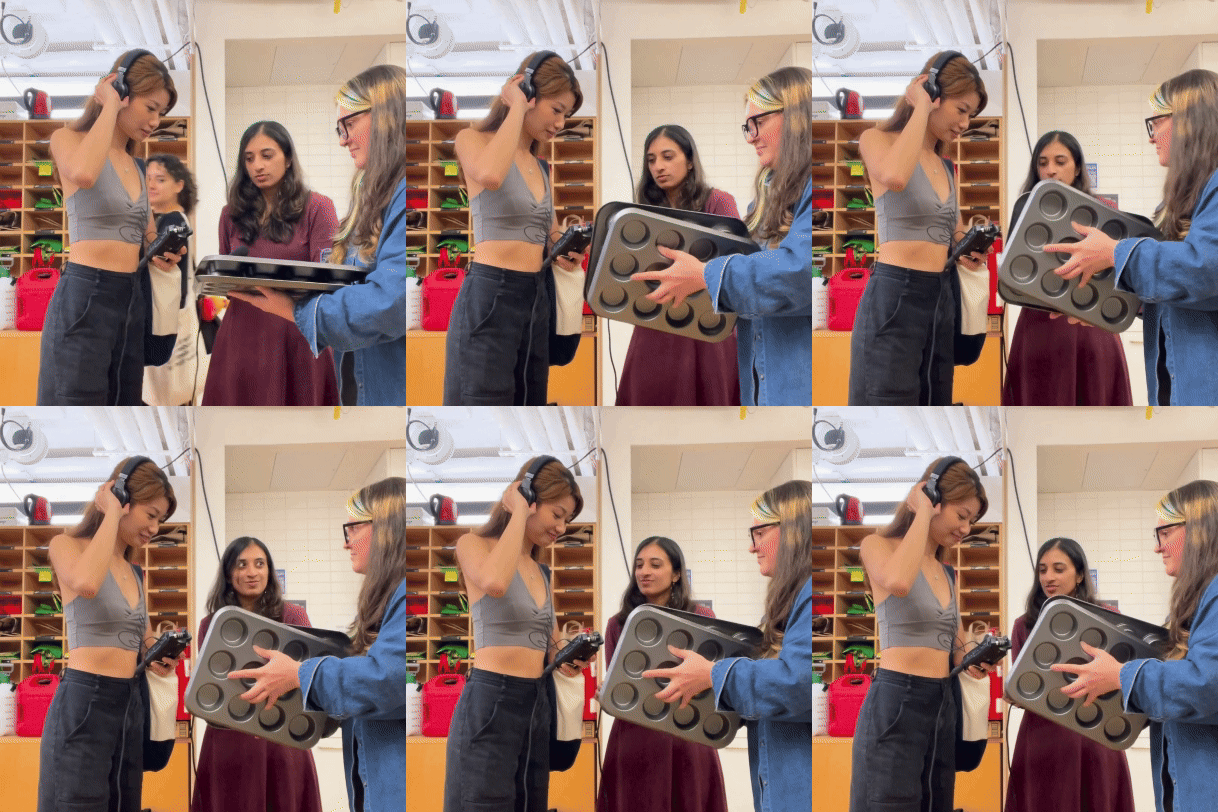
It also helped to break down some of the sounds into further descriptions or think of other musical references. For example, what kinds of film scores do I associate with loneliness and what are the sounds and sound treatments that make up that overall feeling?
In this case the foosball table was a great example of finding an unexpected sound that ‘fit’ the feeling of loneliness- empty, hollow, echoing, sluggish, low tones- that we knew we wanted to capture as soon as we heard it.
Because we did a lot of our sound recording on the ITP floor, it was sometimes difficult to isolate the sounds enough to be clean and legible. We found this especially difficult when recording more quiet, subtle sounds like squishy and loneliness.
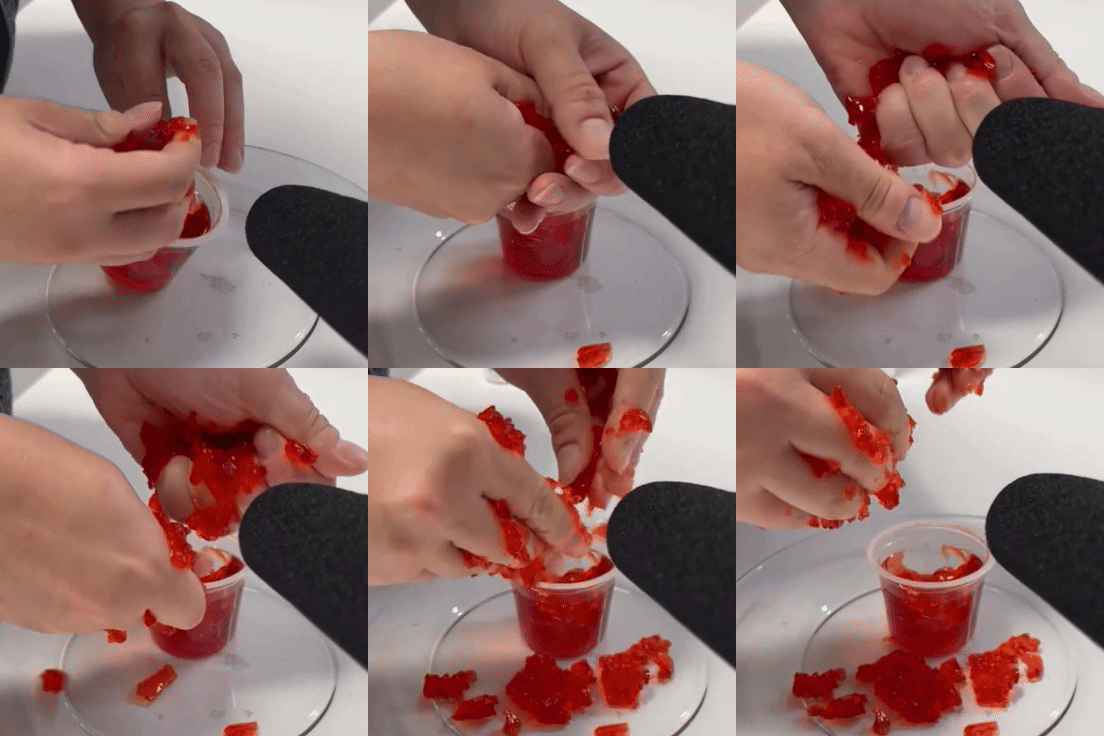
My favorite part of this project was exploring sounds in a new way. I loved creating unexpected noises and appreciated how the process behind this project encouraged me to play with different materials ranging from machines to found objects to food. It was also interesting using a high-quality sound recorder and having the ability to hear the more subtle parts of a recorded sound that I might not have appreciated otherwise.
For example, I was so excited to squish jello and while it measured up to the joyful tactile experience I imagined it to be, the noises it produced were anything but. Instead of a cute sound that gave the impression of colorful gelatinous sugar, it produced a visceral, off-putting sound that left me and the rest of my group feeling a little nauseous.
⋆⑅˚₊ RECORDED SOUNDS ₊˚⑅⋆
sound of cold
crunching snow beneath feet, chilled wind howling, delicate clinking of ice
sound of loneliness
hollowed, haunting, quiet
sound of happiness
energetic, loud, silly, warm
sound of jealousy
ugly side of beauty, subtly builds until overwhelming
a ticking sound
a measure of time, lost in thoughts
a humming sound
droning, loud, harmonious
a metal sound
clinking, clanking, metallic, abrasive
a squishy sound
thick, gloopy, mushy plop, squelching


Leave a Reply