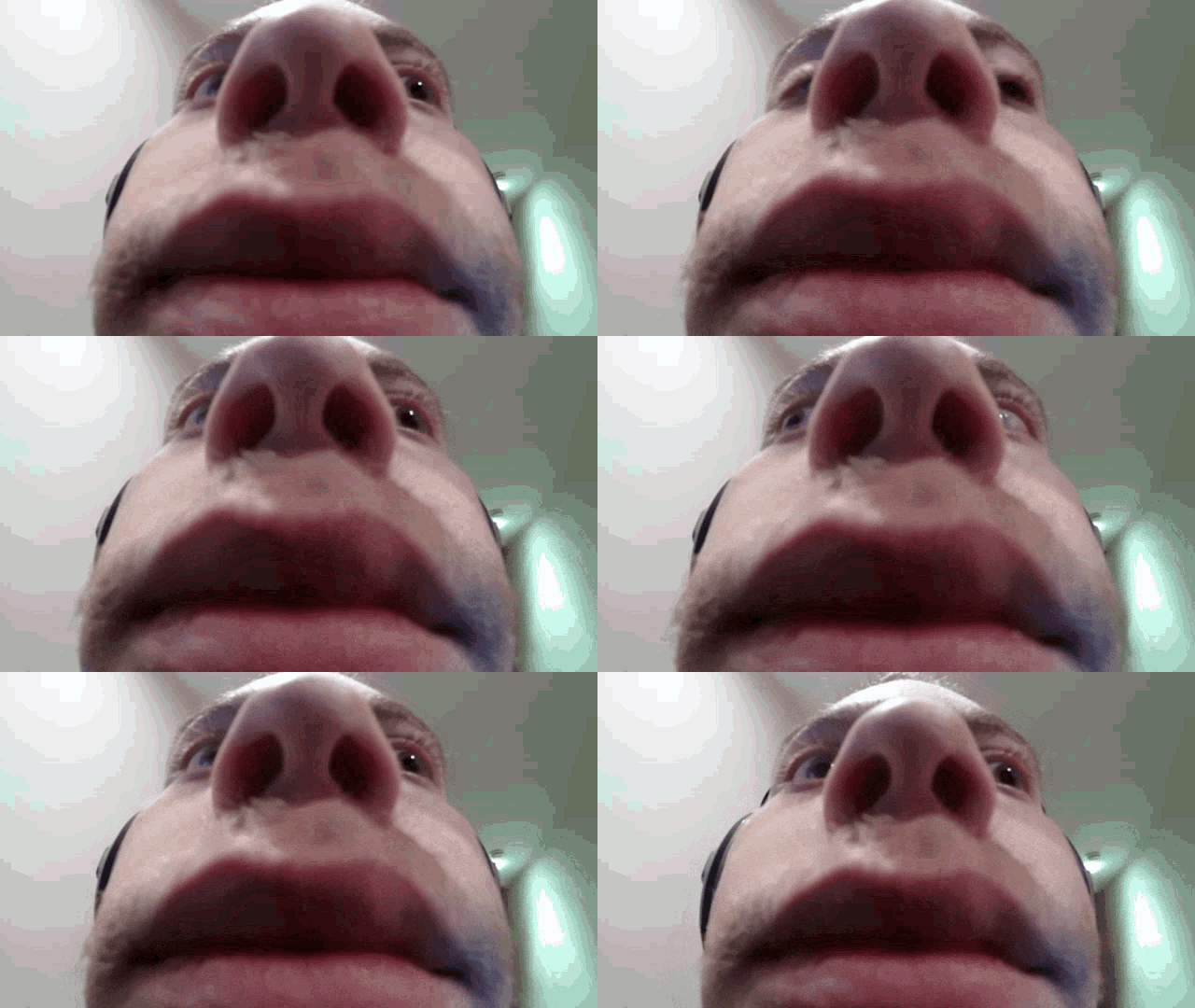
ASSIGNMENT // STORYBOARDING:
This week Chris, Alyssa, and I built out more of our project idea that centers around the theme of surveillance. We were inspired by the idea of all the cameras in the rig and how it relates to so many devices are monitoring you all the time without you realizing, and often without your direct consent.
Our idea is for there to be an installation that allows the viewer to immerse themselves in a dystopian situation at a surveillance/cctv work station. The viewer is able to flip through several different individuals going about their daily tasks at home while being completely unaware that they are being watched.

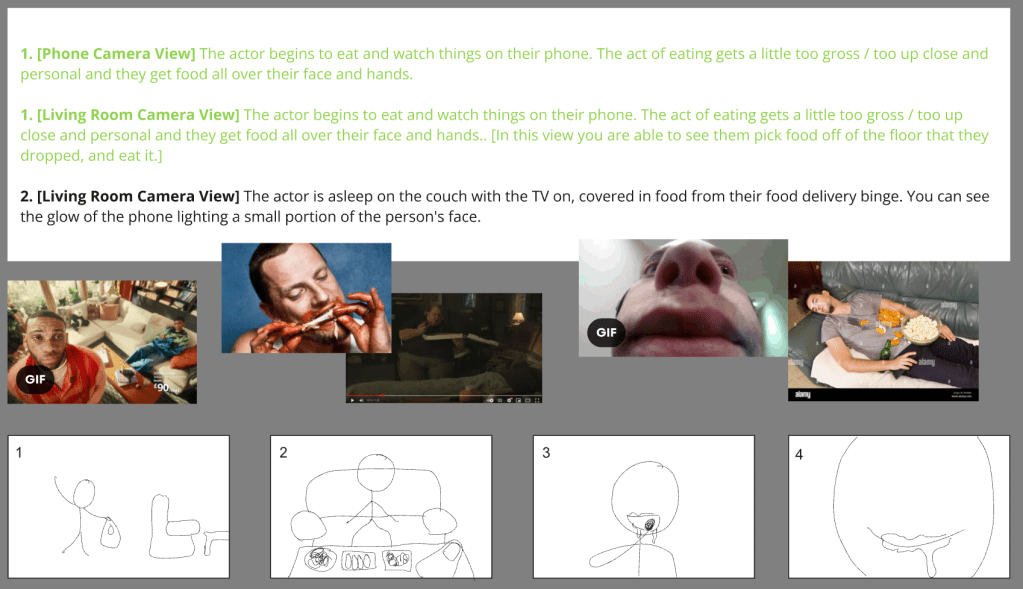
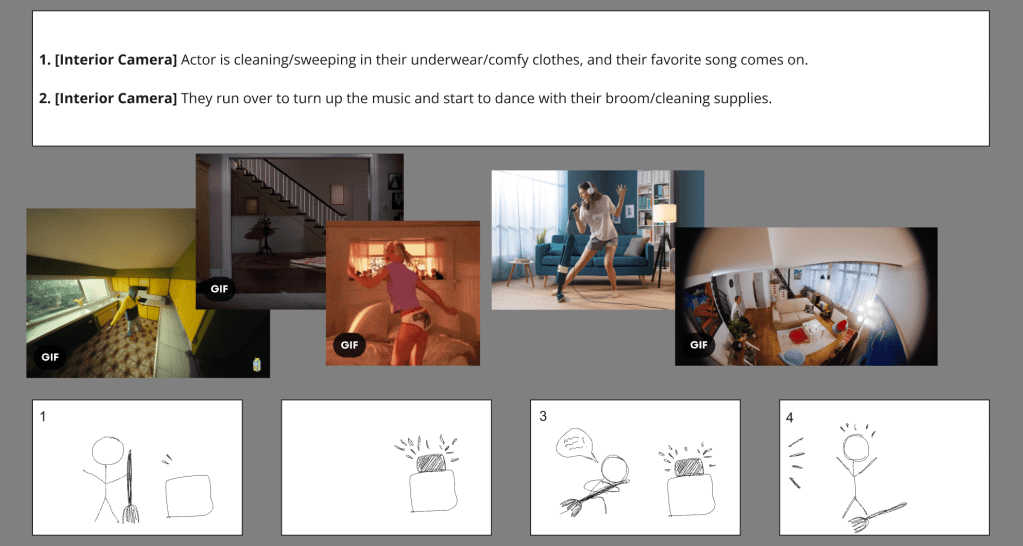
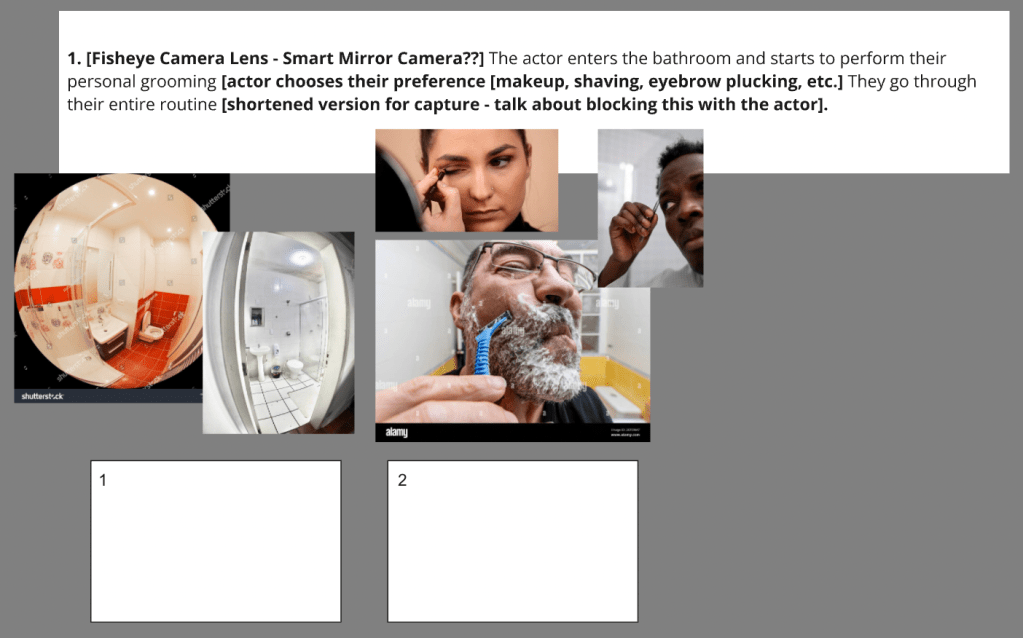
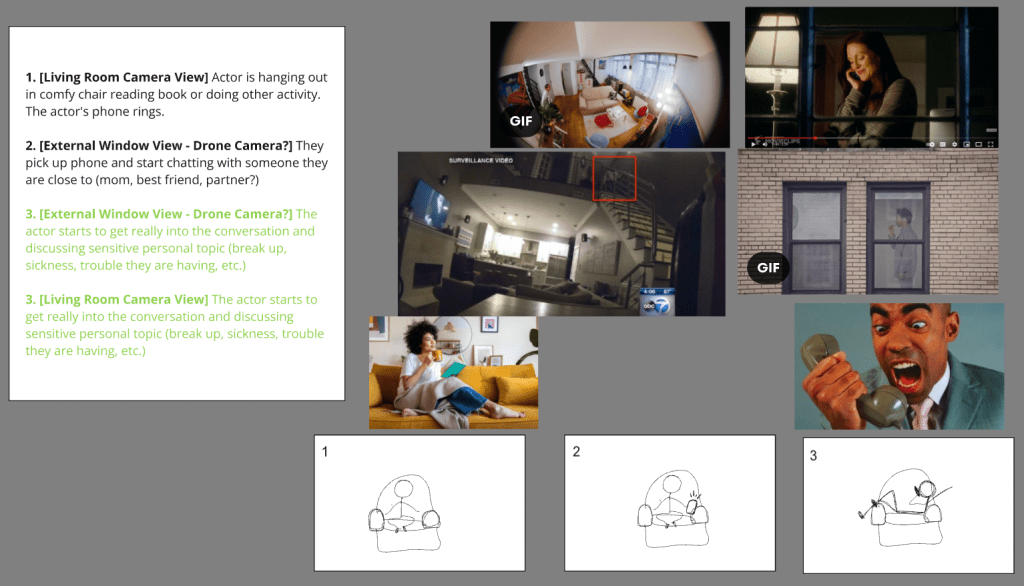
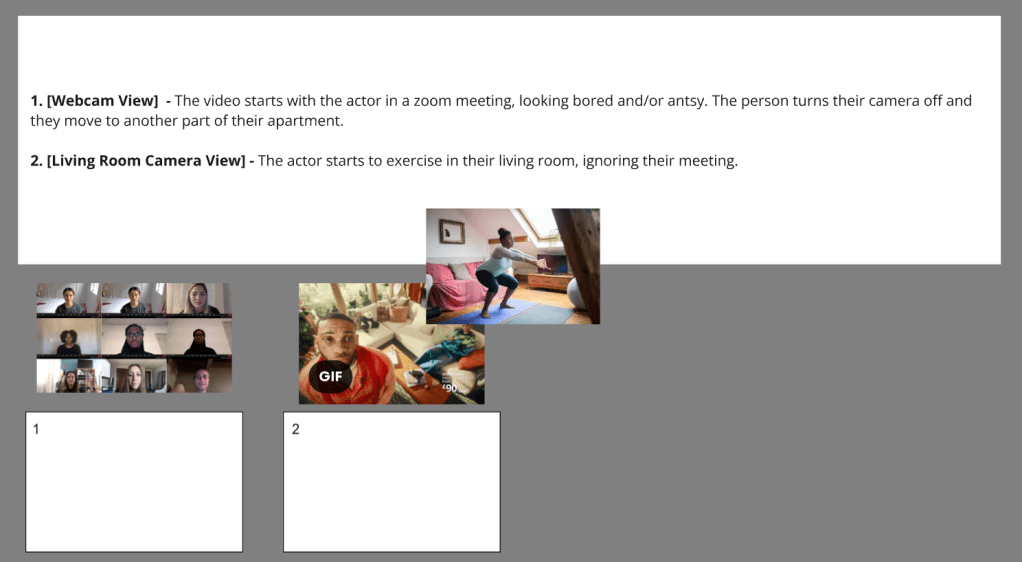
The situations we are planning to film include dancing at home in loungewear to a favorite song while cleaning, working out during what is supposed to be a work zoom meeting, a personal phone call, pigging out on a door dash delivery, personal grooming, and falling asleep with the tv on.
While a lot of these situations seem meaningless, it is a testament to how much we are monitored daily without realizing it and the ways in which our personal lives become fodder for larger organizations to build entire stories and extract data from that they will then profit using.
⋅˚₊‧ [◉”] ‧₊˚ ⋅
READING RESPONSE :
“In Defense of the Poor Image” by Hito Steyerl
Hito Steyerl outlines how degraded and poor quality images have merit, especially in a world that keeps raising the bar in terms of quality. Poor images are more accessible in that they can be accessed by a greater variety of devices and also remind us of the imperfect human experience.
While there is something to be said for insanely high quality works of art, there is also value in images that can be disseminated. And maybe it is kinda weird to say, but there is something inherently punk about shitty quality images that can be widely disseminated. I think that industry places a huge emphasis on quality but it is not always the best way nor the way that makes the most sense.
It is also interesting how a lot of social media and Internet culture tends to lean towards more degraded forms of media relating to the visual bonds mentioned in the paper. While visual bonds here are more relating to visual language for the purpose of working-class solidarity, I think that there is an inherent ‘Internet language’ that is codified in memes and bad edits/mashups that in some ways build community online. I won’t go as far to say that ‘brain rot’ and Skibidi Toilet is akin to the communist manifesto but it does create online discourse and familiarity through the repetition of texts and symbols that industry tries to emulate, but more often than not falls extremely short of and ends up sounding out of place and disengenuine.
 itp oddities
Leave a comment