ASSIGNMENT // 3D PORTRAITS:
Produce two portraits— one of a person and one of the objects representing a person.
I decided to do portraits that represented my partner both at work and at play. My partner is the kind of person that picks something and dedicates himself fully to it. I really admire the mastery of his craft in both his work and hobbies because I am someone who likes to jump around a bit more and experiment. His discipline reminds me that sticking through the difficult times and learning from your mistakes helps you fine tune your skills and hone your craft.
⋅˚₊‧ [◉”] ‧₊˚ ⋅
PORTRAIT 1 // PERSON:
About the portrait…
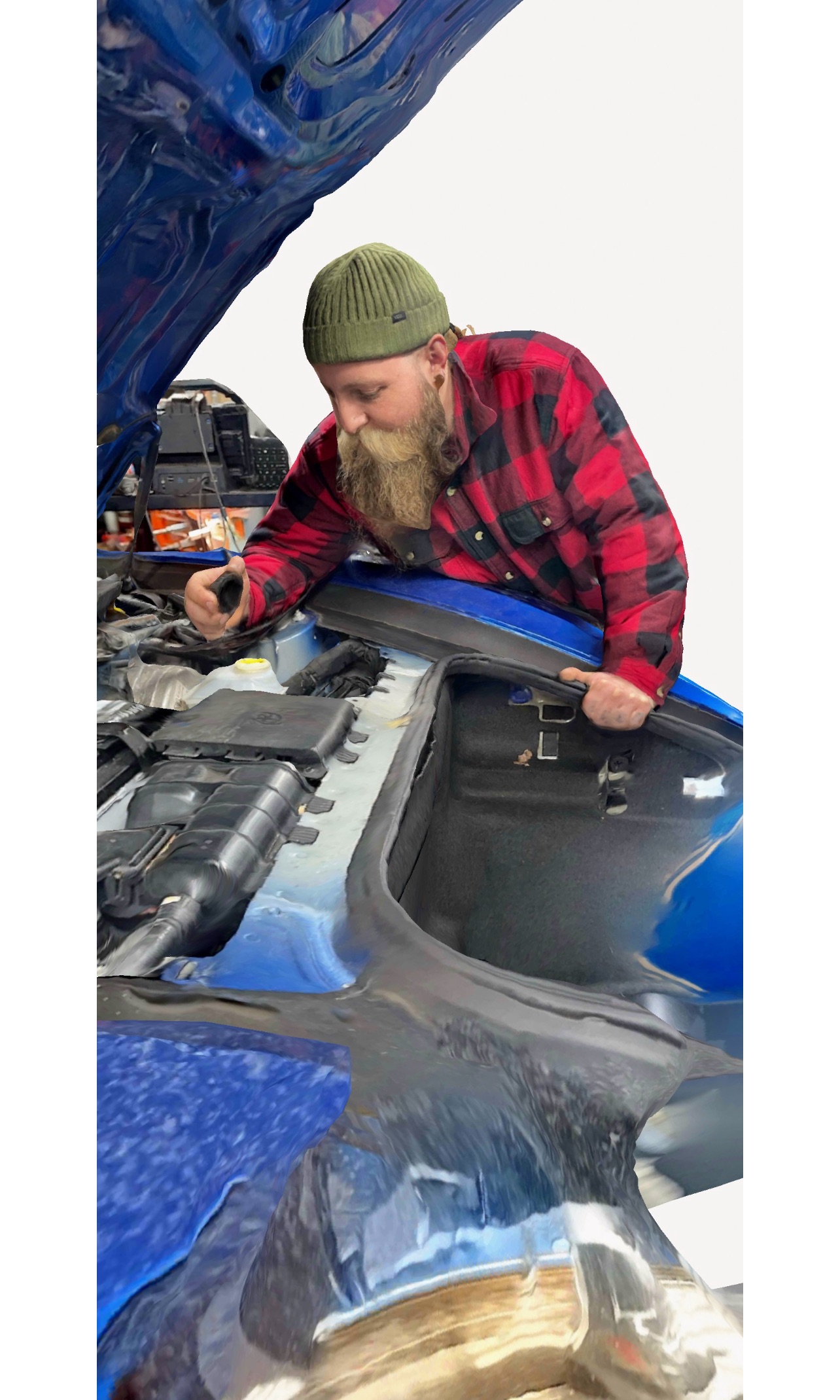
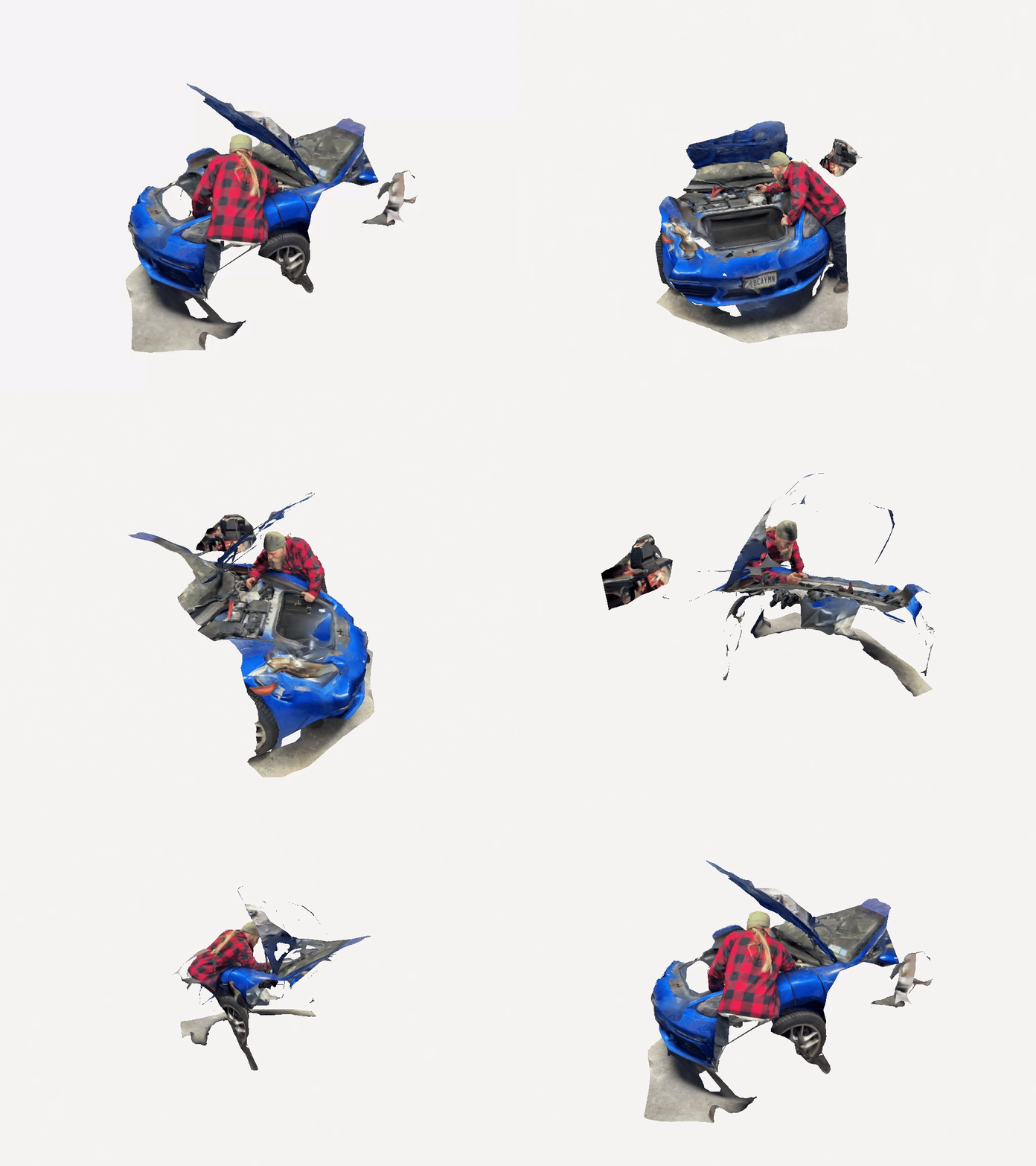
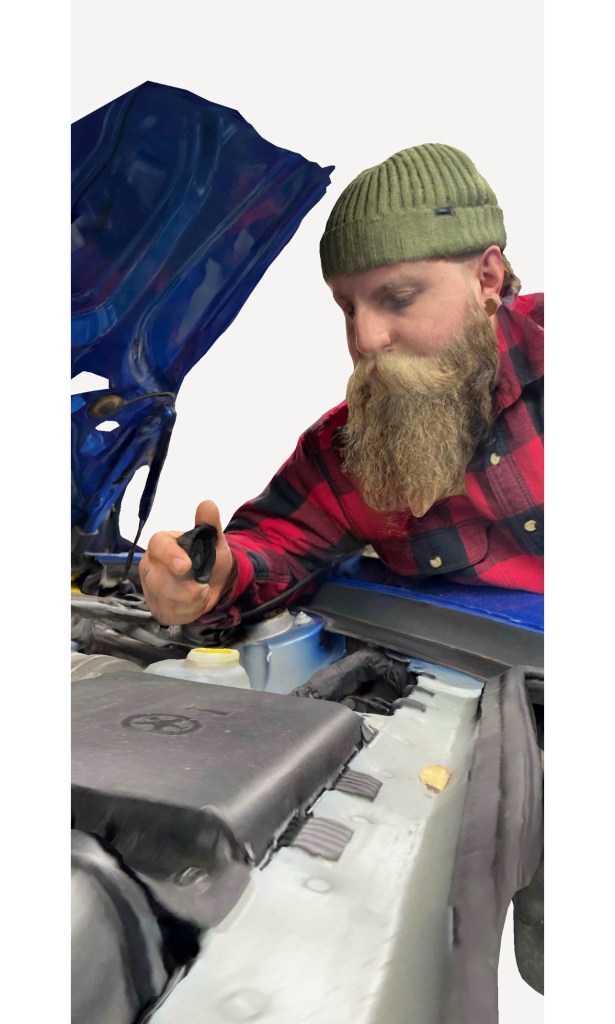
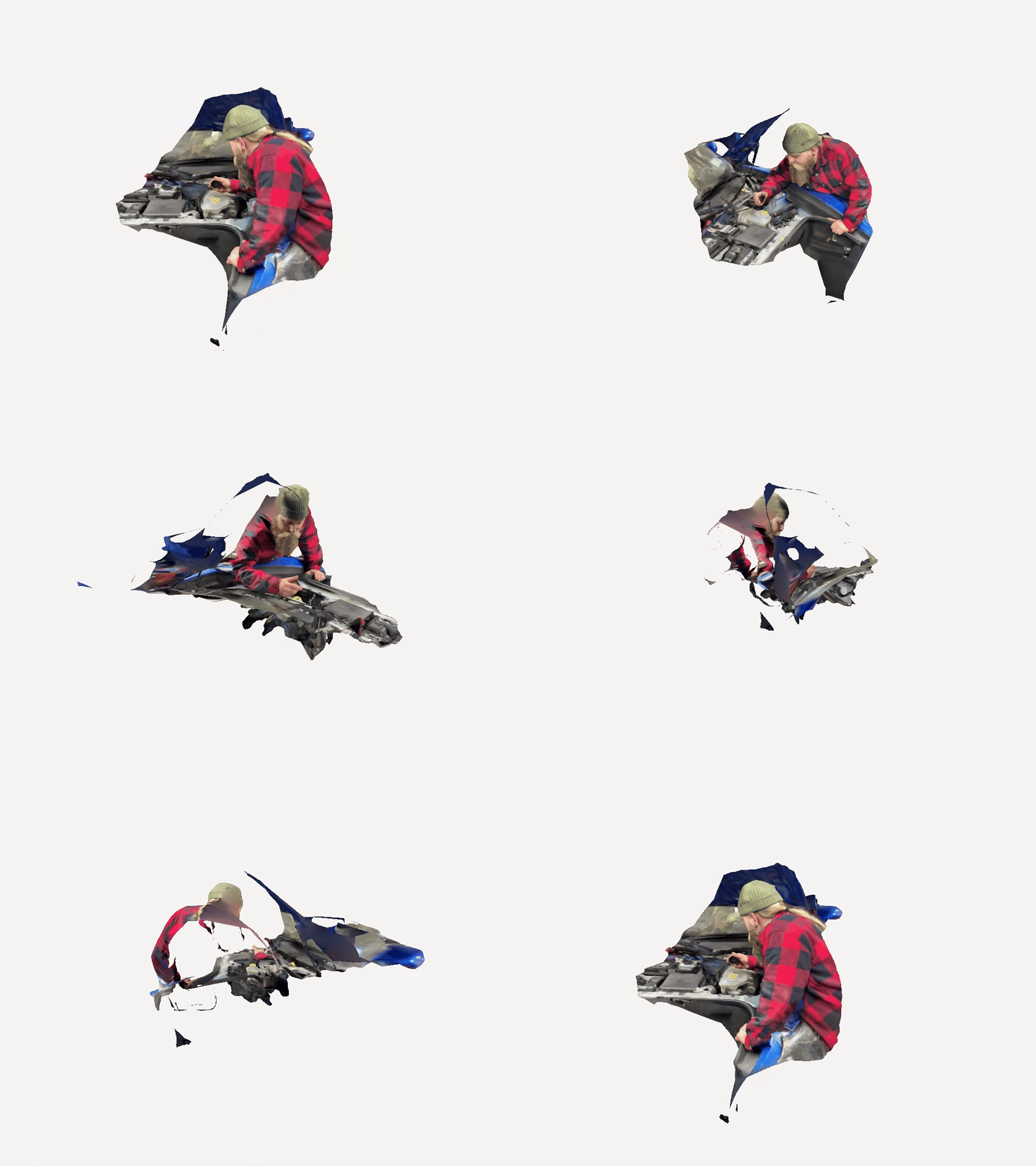
I decided to take a scan of my partner while he was working on a car for his job as an automotive technician. He has been working on cars since he was a teenager and after years of working on Volkswagens, he made the jump to Porsche. Seeing how hard he has worked to get where he is now has been really inspiring and I am really proud of him.
About the scan…
I did the scan twice because the first time I tried to capture too much and ran into the photo limit before I felt like I got enough to get the details right. I tried it again and zoomed in a bit more on the subject and felt like I got better details but then saw when I went to go export that the back of the head was a little blurry/didn’t have as much detail as I would have liked.
If I did this again I think I would want to play more with the distortion aspect which I think could make some interesting effects. I also would like to learn how to clean this up a bit more in Blender so I can combine different parts of different scans together.
⋅˚₊‧ [◉”] ‧₊˚ ⋅
PORTRAIT 2 // OBJECT:
About the portrait…
When not at work (and when it is a bit less icy and cold out) he also rollerblades, a hobby he has been doing since he was about 9 years old. When we first met I was skating for my local roller derby derby team so it was an activity that we were able to share and bond over so it is a bit sentimental to me even if I don’t skate as much as I used to.
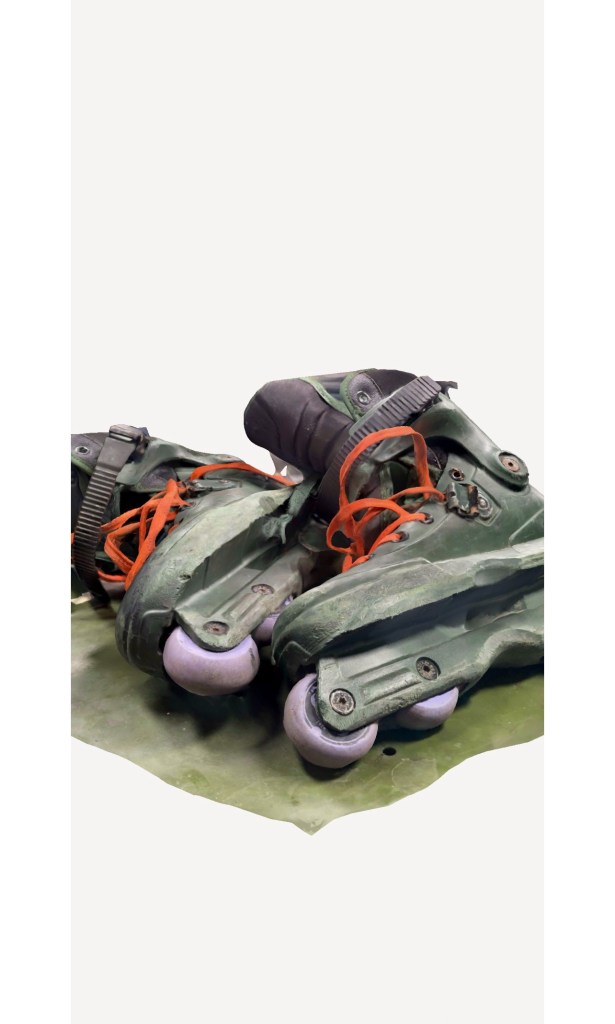
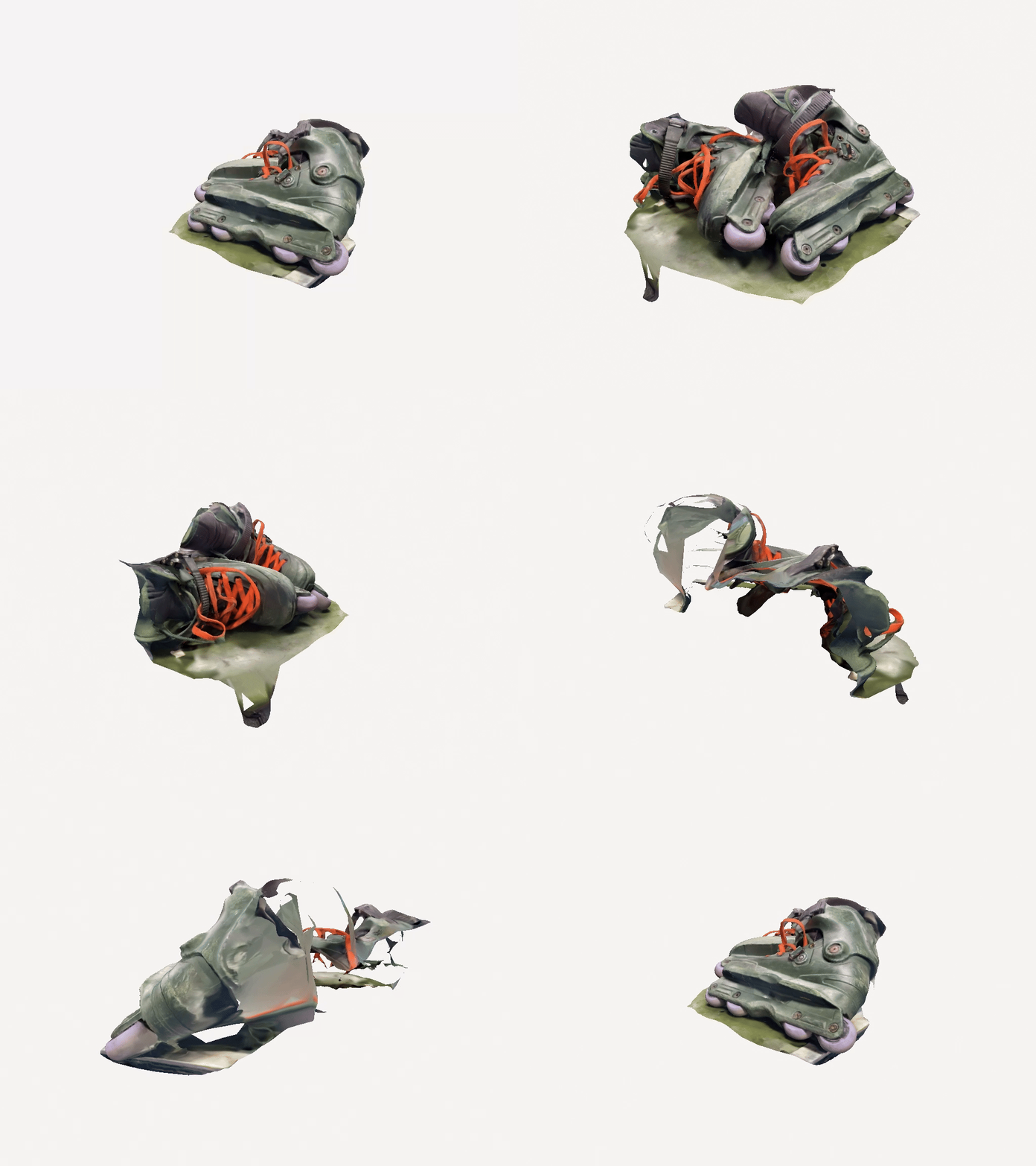
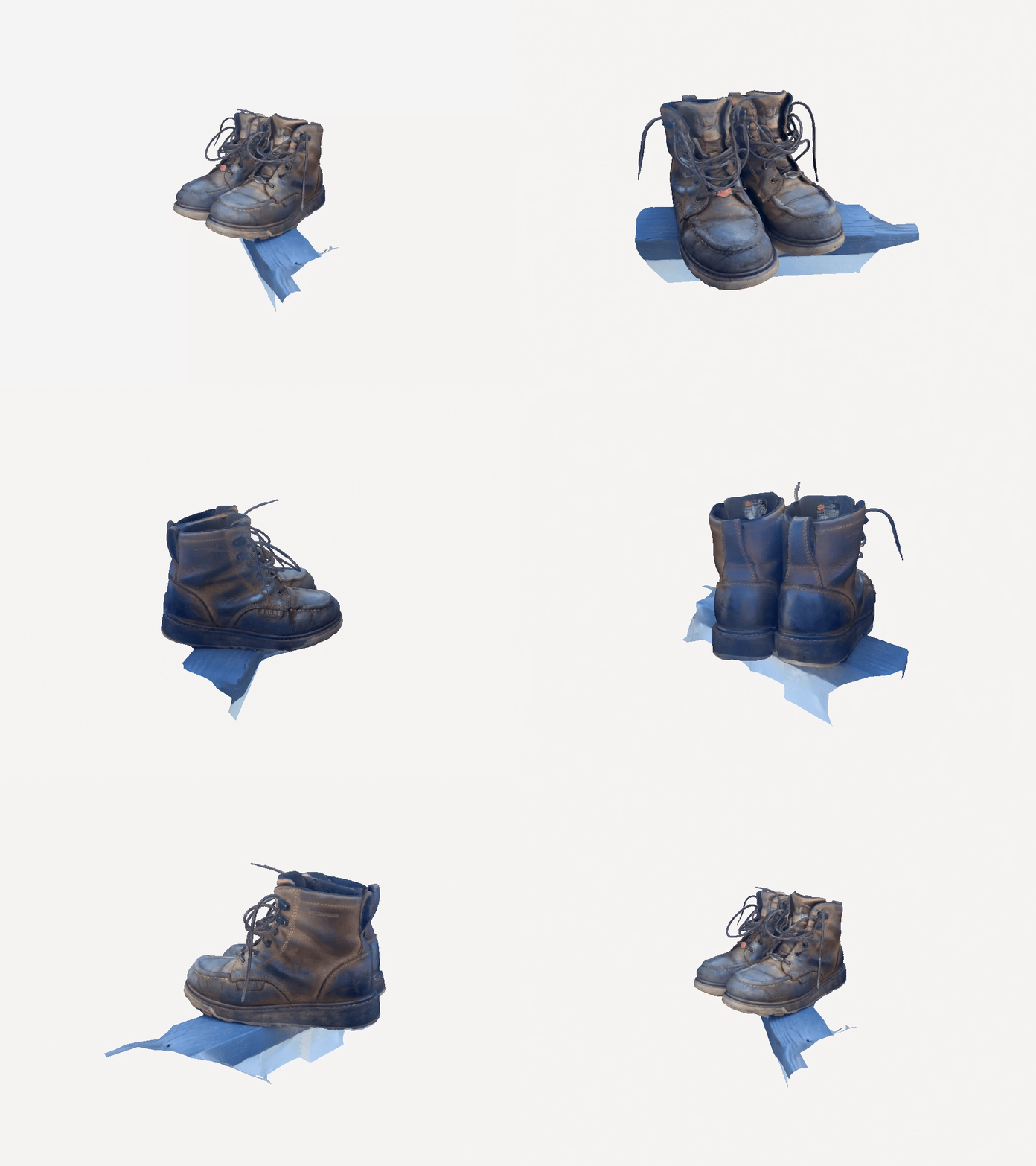
Here is a pair of skates that he really clicked with in the past year and helped lead him to his first sponsored skate video early last year.
About the scan…
This scan was fun to do but I realized at the end that the shelf I did it on was backed up a little too close to the wall so it was hard to get the interior of the skates. I was really impressed with the level of detail captured in all the scratches on the skates and the gap with the laces.
⋅˚₊‧ [◉”] ‧₊˚ ⋅
TEST SCANS:
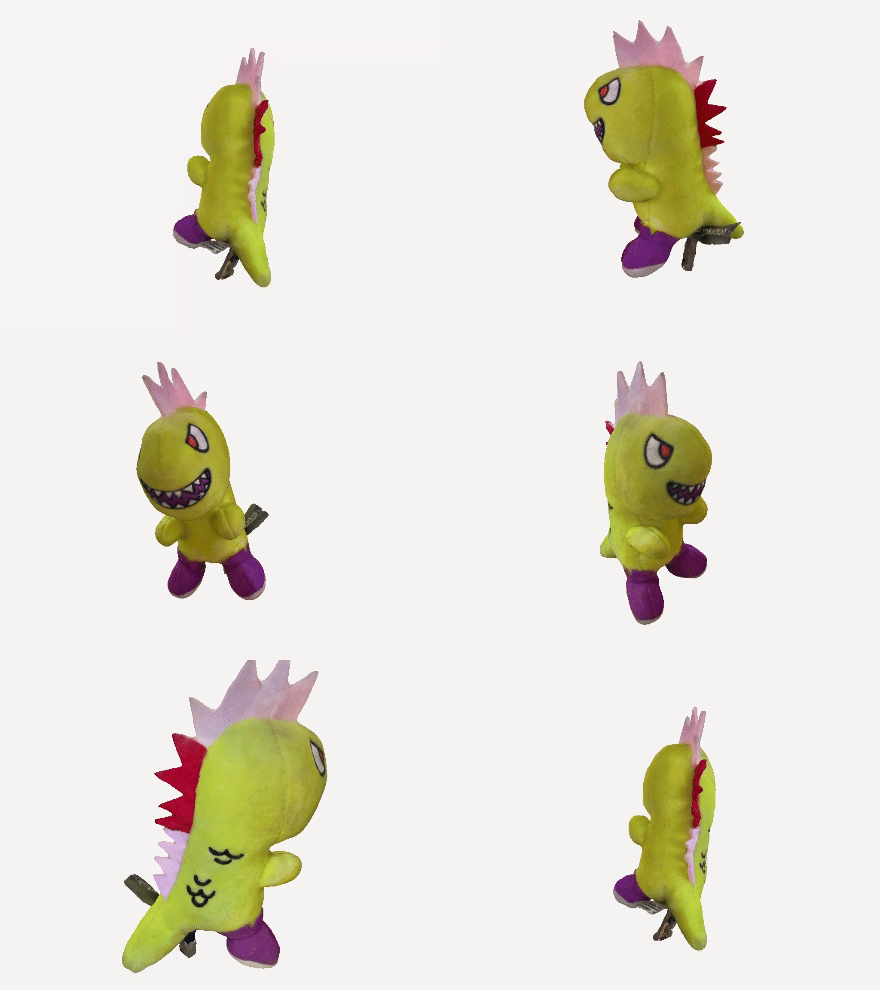
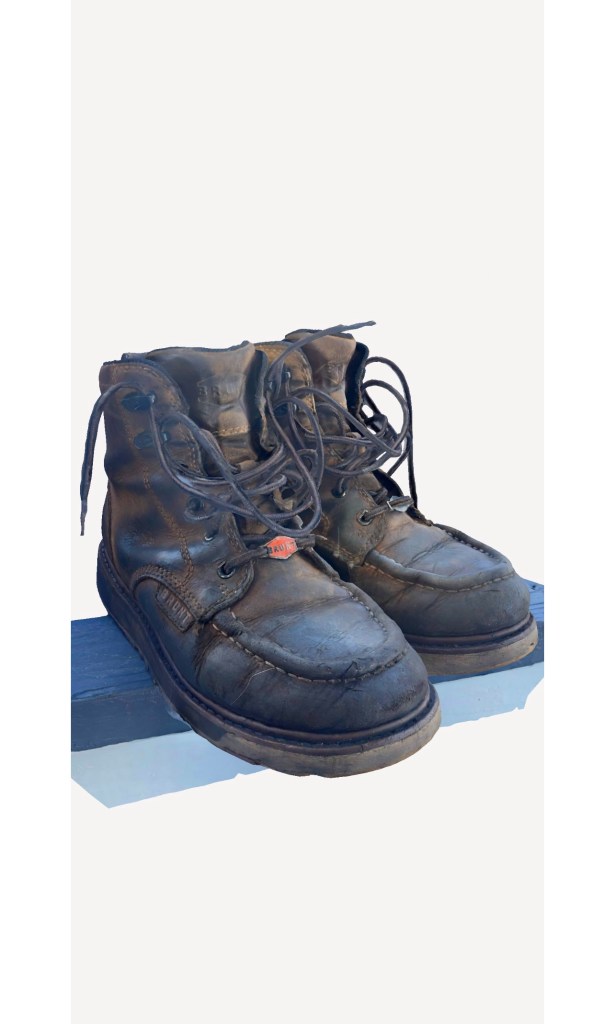
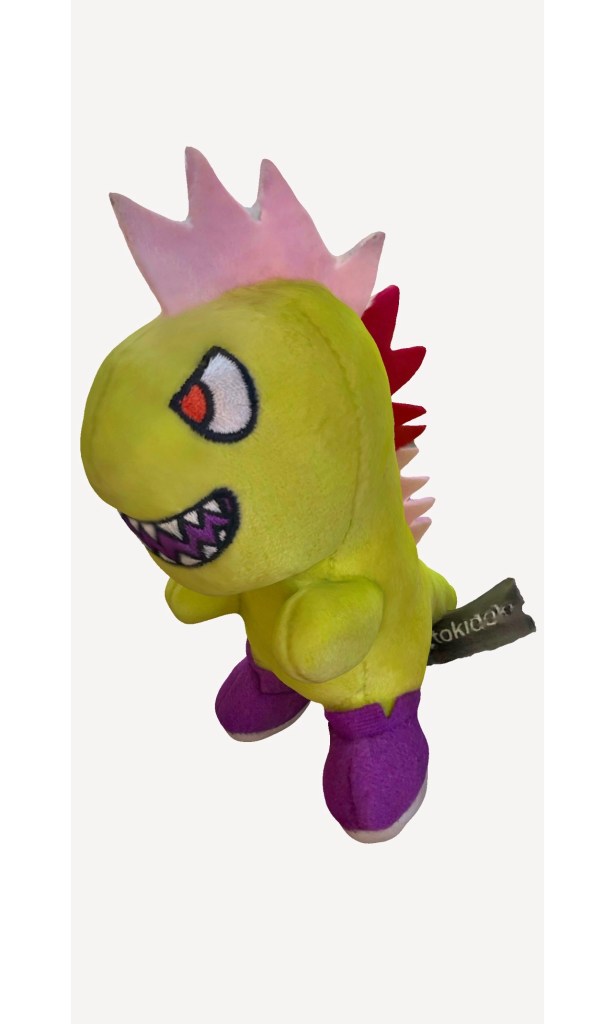
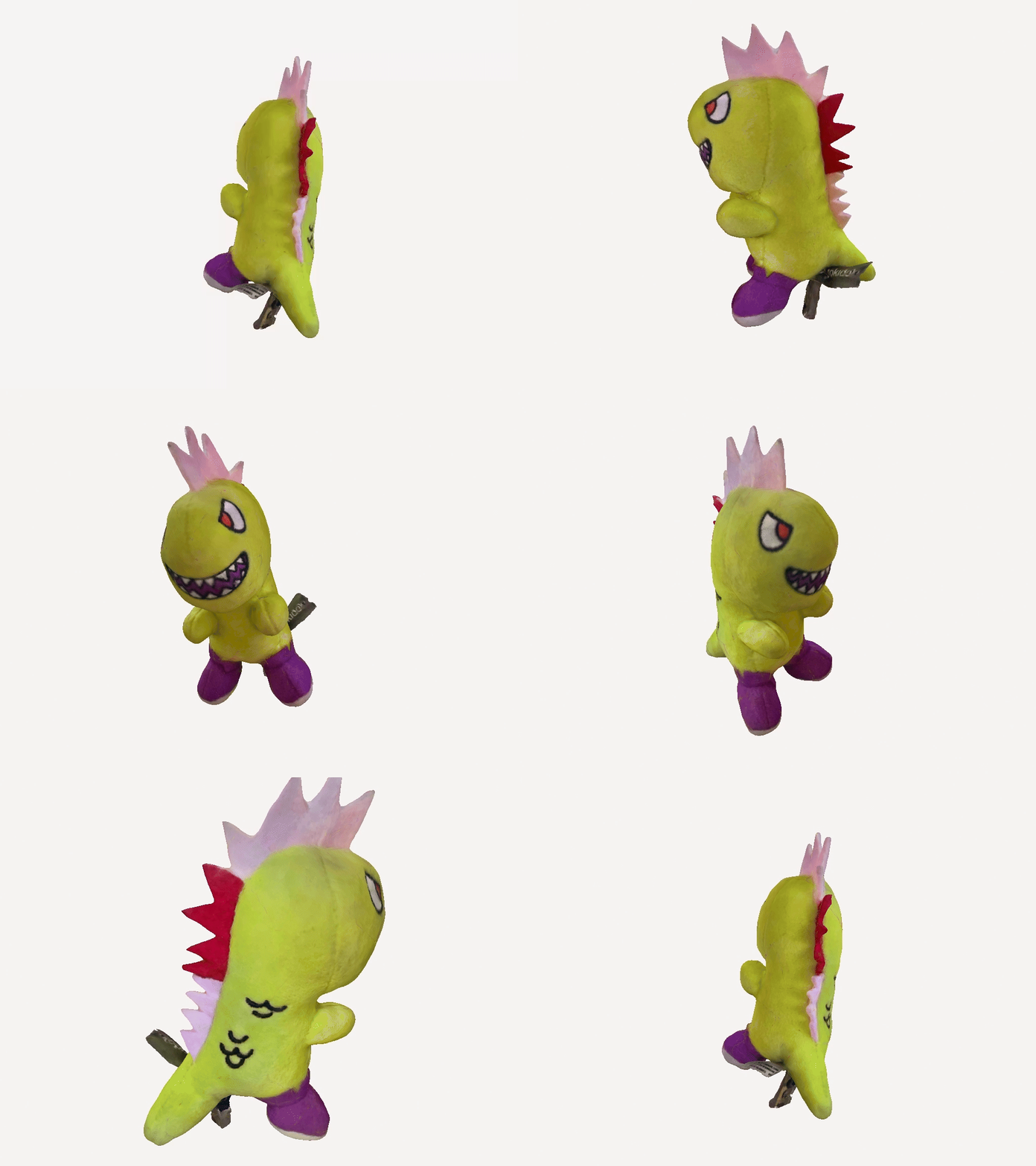
I decided to also do some test scans for fun just to practice. I could see this being a fun and easy way to capture 3d objects for digital collage or use in AR filters in my creative practice. As I am learning Touch Designer, I would also like to see how I can implement 3D objects to make them interactive to sound or motion.
Things to keep in mind for next time:
- Playing with accuracy
I think it would be fun to play with more distorted forms and scans to do something a little more conceptual and visually interesting. - Moving slower works better
When I took the time to get captures of all the details and moved slower for the subjects it helped a lot with keeping the details intact and getting more accurate scans. - Get different angles and points of view to avoid gaps in the scans
Not forgetting to scan where objects come together or the underside of them helps to fill in gaps and capture more details.
⋅˚₊‧ [◉”] ‧₊˚ ⋅
READING RESPONSE :
Sculpture as the Sum of Its Profiles: Francios Willeme and Photosculpture in France, 1859-1898
For this week’s reading one thing that immediately stood out to me was how closely the Photosculpture apparatus outlined in the book seems to mirror volumetric capture. It is wild to think that some of the basic ideas that were revolutionary at the time are being used today just in a more digitally-based format. It is a good reminder of how science, invention, and art are so closely intertwined and that some of the best ideas and inventions come not from industry, but from an artist looking for ways to do their work.
Something that also strikes me as interesting is that we often think of technology as needing to be this huge, loud advancement centered on digital devices but often analog methods are equally or even more effective. In some ways I think a lot of people are moving back to more analog ways of making as a way of escaping our hyper-digital lives. While I could probably much more efficiently sculpt a vase in a 3d program, there is something very satisfying about crafting something physically with your hands that makes you feel connected with what it means to create and be human.
 itp oddities
Leave a comment