LABS:
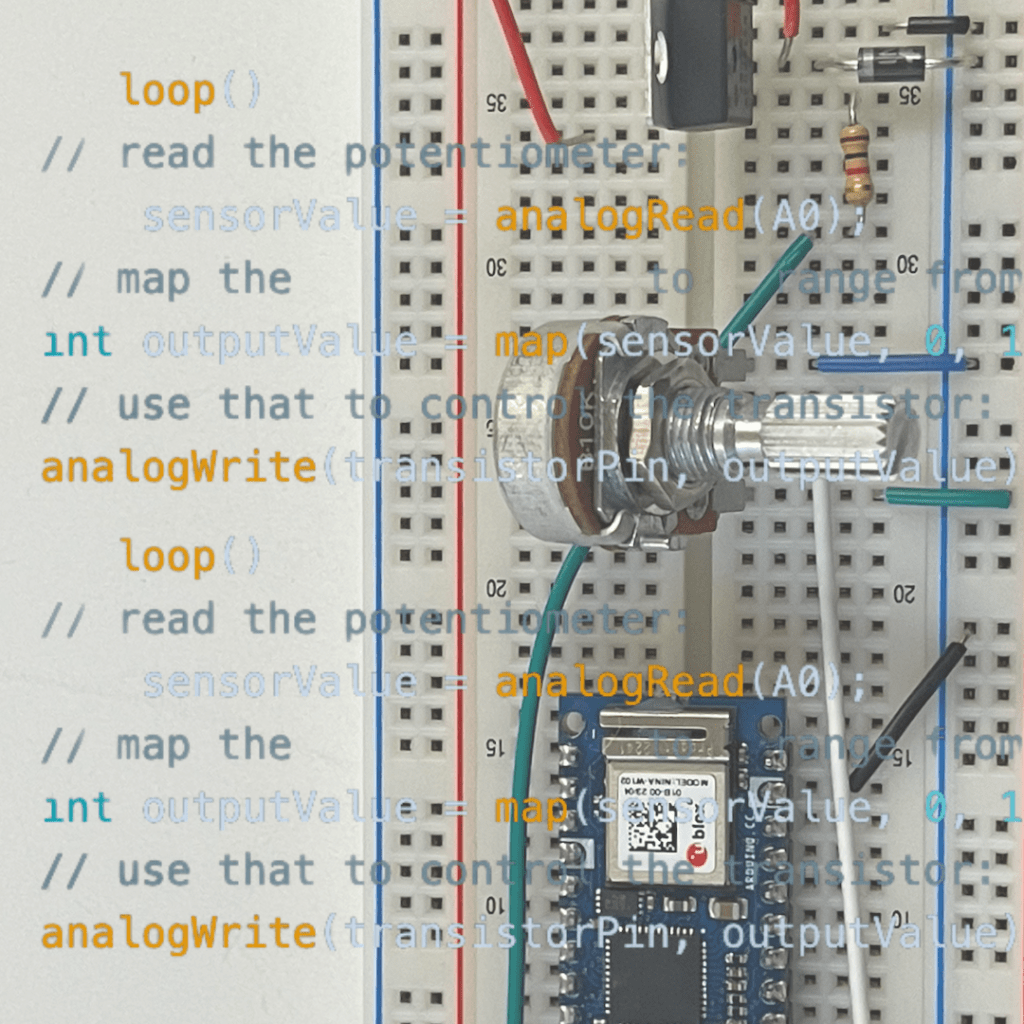
The main purpose of the labs this week was to learn about creating circuits with higher current loads and motors.
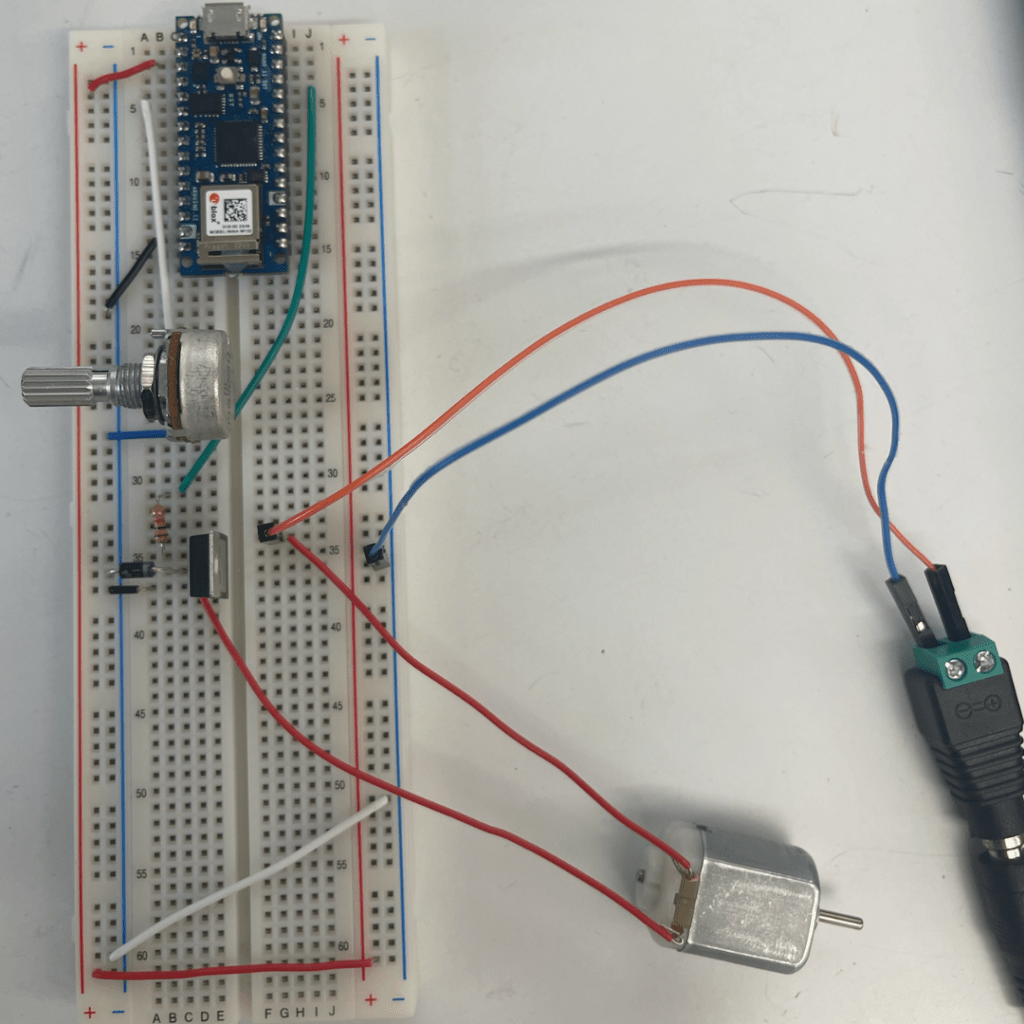
This lab seemed pretty straight forward and it was interesting hooking up a separate power source outside of the Arduino controller.
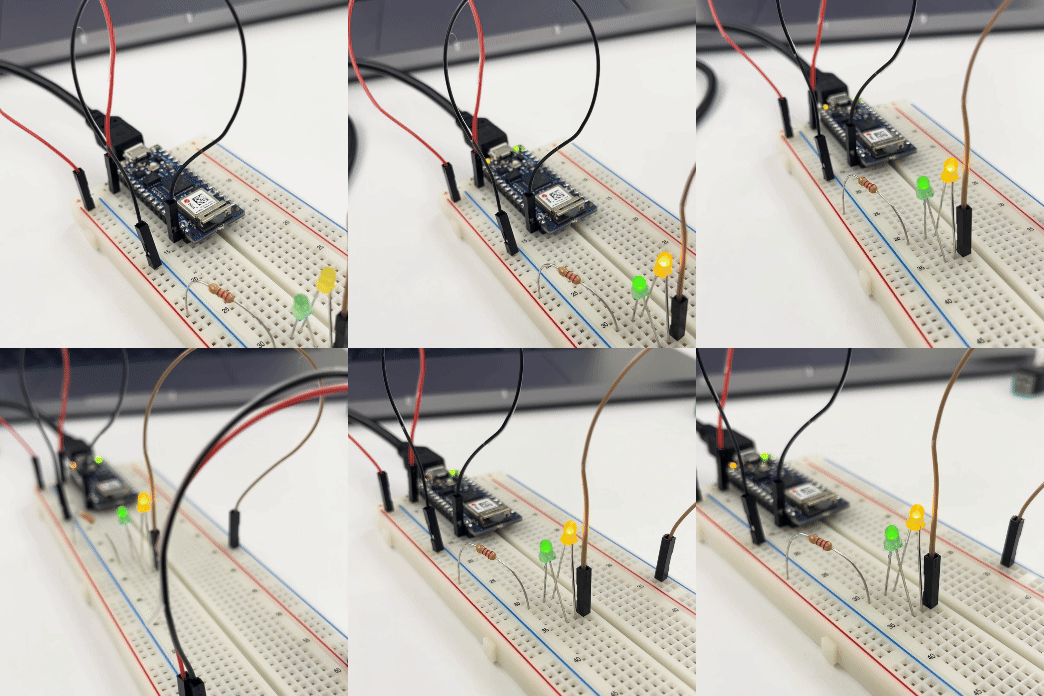
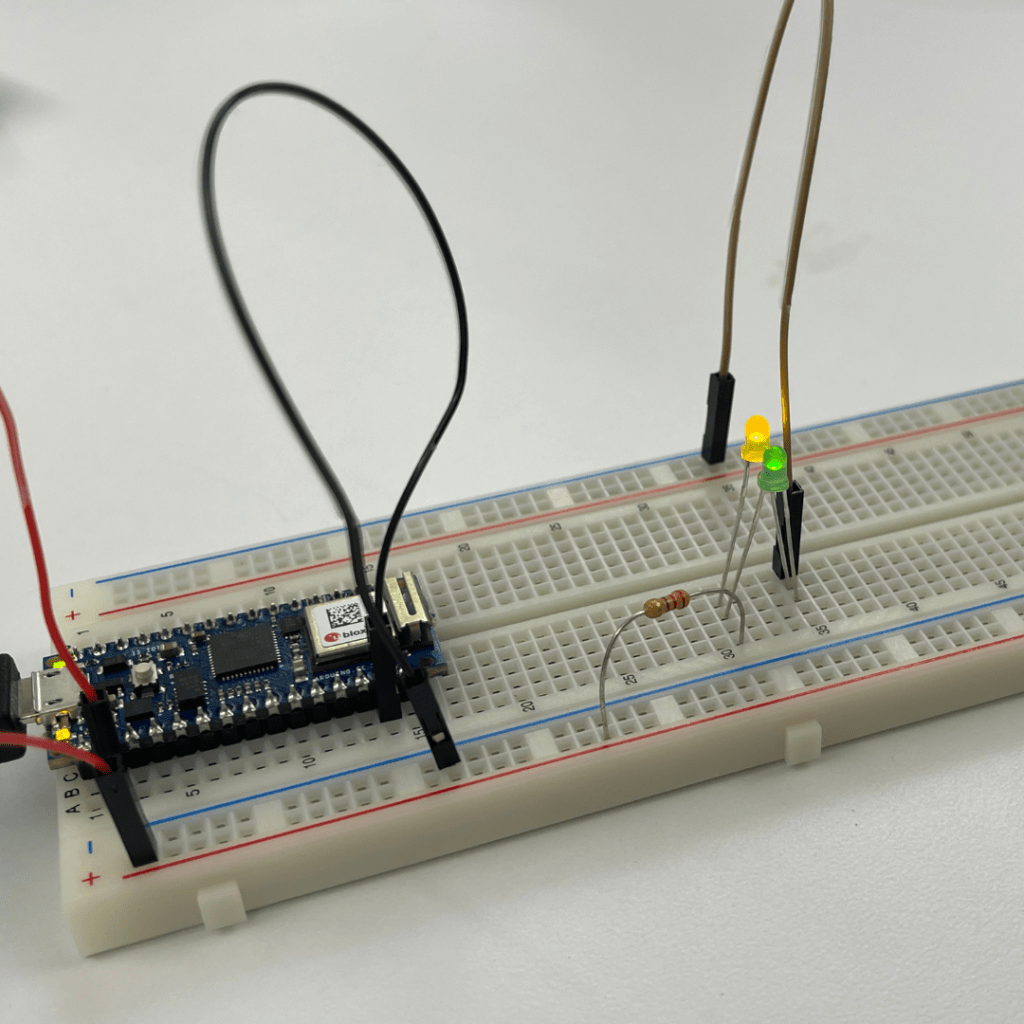
I then used an H-bridge to be able to use the Arduino to change the motor’s direction. This lab I struggled a bit more with and at first I couldn’t figure out why.
I was getting power both through the Arduino and the DC power source but the motor would not turn on. I tried a different motor and motor driver and that still didn’t work. After coming back from a walk because I was so frustrated I realized I had switched the order of two of the connecting wires in the schematic drawing and it finally turned on.
While it was really frustrating in the moment it was a good lesson in trying out everything to see if it was broken and reminded me of a saying my partner who is an auto mechanic always says “KISS” or “Keep It Simple Stupid.” Meaning that it is often the simplest thing you skipped over so start with the most obvious things you might have looked over and go from there.
LAB QUESTION:
Question: Motors can be used to make things move, vibrate, rise, fall, roll, creep, or whatever you can think of, in response to user input from a digital input device (switch, floor sensor, tripwire, etc). Look inside moving toys, you’ll find a number of excellent motors and gears you can re-purpose. Perhaps you can re-design the user interface to a toy, using the microcontroller to mediate between new sensors on the toy and the motors of the toy.
In thinking about toys or projects that you could redo with an interface with using an Arduino, I was immediately reminded of a giant K’NEX ferris wheel that used to run in the window of a local toy store when I was a child. It would be interesting to make an entire theme park that runs on timers or other interactions like movement so that there is one ride always triggered by another in a continuous loop.
While it isn’t necessarily powered by a motor, I also would love to be able to circuit bend my own child’s toy one day to create a fun noise machine that uses potentiometers and switches to trigger distortions and weird effects. I have seen a lot of other people do this online over the years and it is definitely a goal of mine to make one.
⌁ ࣪₊˚⊹ ˚₊ ࣪⌁
MIDTERM UPDATES:
Olivia and I have been struggling with our midterm because we are kind of skipping ahead to a section we haven’t covered yet in class. I also made the mistake of buying microphone sensors that are digital so that it sends binary data rather than a value of 0 to 255. We have since reordered the microphones and also a hypersonic sensor for the project.
Instead of connecting to Processing editor downloaded locally to our computer, we instead took the advice of one of our classmates who said that in a couple weeks time we would be learning how to connect to p5.js’ online editor. After tinkering with that lab we finally got it working and scheduled an office hours to get a better understanding of where the Arduino data is being fed into the text editor and how we might be able to then influence designs using that information.
We are hoping that after getting some insight from the office hours we will then have enough time to dial in the sensors and build an interesting generative code environment for users to manipulate via sound and proximity.
⌁ ࣪₊˚⊹ ˚₊ ࣪⌁
 itp oddities
Leave a comment